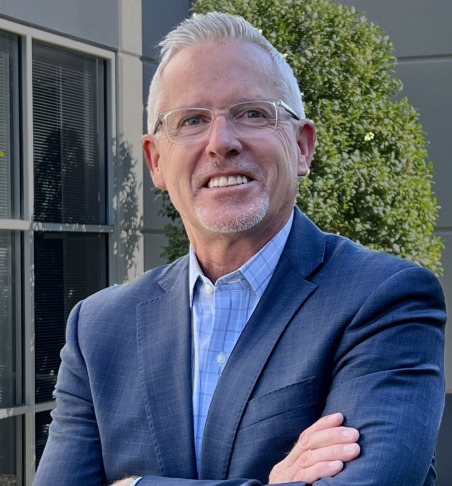
written by John Leigh, SVP Sales
June 3, 2026
There’s a moment in every network transformation that rarely gets discussed in the boardroom. It’s not the excitement of a 5G rollout. It’s not the innovation of virtualization or Open RAN. It’s what happens after. What happens to the equipment that powered yesterday’s growth?
For years, the industry has treated this as an operational footnote, something to deal with once the “real work” is done. But from where I sit, that thinking is quickly becoming outdated. The afterlife of network equipment is no longer a clean-up exercise, it’s a strategic opportunity hiding in plain sight.
A Changing Mindset Across the Industry
I’ve spent enough time with telecom leaders to know the pressures they’re under. Every dollar is scrutinized. Every investment must justify itself. And yet, billions of dollars in infrastructure quietly sit idle once it’s decommissioned. That disconnect is starting to close.
Operators are realizing that network infrastructure doesn’t simply lose value when it leaves service, it shifts value. And if you manage that transition correctly, it can become a source of liquidity, agility, and even competitive advantage. We’re seeing a shift from ‘deploy and discard’ to ‘deploy, optimize, and recover.’ That’s a fundamentally different mindset and it’s long overdue.
Several forces are accelerating this shift:
- The speed of technology change is compressing asset lifecycles
- Capital constraints are forcing smarter reinvestment strategies
- Sustainability is now a board-level priority, not a side initiative
- Global demand continues for proven, lower-cost equipment
Taken together, these dynamics are reframing how executives think about ownership and more importantly, lifecycle value.
The Reality of Equipment Resale Today
Let’s be honest: resale in telecom hasn’t always been approached strategically. Too often, it’s reactive. Equipment is removed, stored, and eventually offloaded (sometimes at a fraction of its potential value). Not because the value isn’t there, but because the process to unlock it is fragmented and complex. The market isn’t inefficient because demand is missing; it’s inefficient because insight and execution are missing.
On one side, you have operators sitting on surplus assets without clear visibility into what they’re worth or where they should go. On the other, you have buyers (regional carriers, enterprises, infrastructure providers) actively looking for reliable, cost-effective equipment.
The opportunity is obvious. The challenge is connecting the two intelligently.
Where the Industry Is Headed
If I look ahead, I see the concept of “network afterlife” evolving into something much more structured and much more valuable.
We’re moving toward a world where lifecycle management is embedded into network strategy from day one. In the future, the question won’t be ‘What do we do with retired equipment?’ It will be ‘How do we design networks with recovery value in mind from the start?’.
Here’s what that future looks like in practical terms:
- Circular asset strategies where equipment flows across markets instead of into storage
- Real-time valuation models driven by global demand signals
- Integrated decommissioning and resale processes built into transformation programs
- Stronger alignment between financial, operational, and sustainability goals
- And perhaps most importantly— A recognition that the network doesn’t end at decommissioning… it evolves
Fortress’s Role in This Transformation
At Fortress, we’ve built our business around this exact moment in the lifecycle; the point where complexity meets opportunity. We don’t see resale as a transaction. We see it as a strategy. Our role is simple in principle but powerful in impact: help operators turn dormant infrastructure into active value.
That means approaching the problem differently.
We Start with Visibility
You can’t optimize what you can’t see. We help operators understand what they have, where it sits, and what it’s worth in today’s market.
We Bring the Market to the Asset
Through global relationships and demand channels, we connect equipment to the right buyers, not just any buyers.
We Remove Friction
From logistics to testing to certification, we simplify what has traditionally been a disjointed and resource-heavy process.
We Align Financial and Sustainability Outcomes
This is one of the rare areas where doing the right thing environmentally also drives financial return. Extending the life of equipment isn’t just good for the planet, it’s good for the P&L. That alignment is incredibly powerful.
Turning Insight Into Action
The executives I speak with aren’t asking whether there’s value in resale, they already know there is. The real question is how to capture it consistently, at scale, and without distraction from core operations.
That’s where Fortress comes in.
We help organizations:
- Convert surplus infrastructure into reinvestment capital
- Improve total cost of ownership across the network lifecycle
- Reduce waste and support ESG commitments
- Move faster through technology transitions without leaving value behind
The companies that will lead in the next decade aren’t just the ones building the best networks, they’re the ones managing them most intelligently from beginning to end.
Closing Thought
Telecom has always been about building what’s next. But what’s becoming increasingly clear is that the next wave of value won’t just come from new deployments; it will come from how we manage what we’ve already built.
Network afterlife isn’t about the past. It’s about unlocking the full economic and strategic potential of the network, long after its first use case is complete. If we rethink the lifecycle, we don’t just extend the value of the network, we redefine it.

John Leigh is a highly respected global business leader and entrepreneur with a proven track record of building, scaling, and leading innovative technology-driven organizations. With experience spanning the U.S., Europe, and Asia, he brings deep expertise in telecommunications, data centers, SaaS, and third-party maintenance (TPM) solutions. Known for his leadership, strategic vision, and ability to turn opportunity into results, John brings a unique combination of technical expertise, executive experience, and customer-first focus that aligns perfectly with the Fortress mission.